Rug Cleaning in Fort Worth, TX — Expert Care for Every Fiber, Style, and Size
A quality area rug is not an ordinary household textile — it is often a significant investment, a piece with genuine aesthetic value, or an heirloom that cannot be replaced. The difference between the correct cleaning approach and the wrong one can permanently damage dyes, shrink natural fibers, distort hand-knotted construction, or destroy the foundation of a valuable piece. At Greater Fort Worth Carpet Cleaning, our rug cleaning service begins with understanding what we are working with before we decide how to clean it — because rug cleaning is not a commodity service and should not be treated as one.
We offer on-site rug cleaning throughout Fort Worth and the DFW Metroplex — we bring our equipment to you, which means you do not need to roll up, bag, and transport your rug. For large, heavy, or furniture-pinned rugs, on-site cleaning is often the only practical option.
Rug Construction and Why It Determines Everything
Hand-Knotted Rugs — The Most Demanding Fiber Type
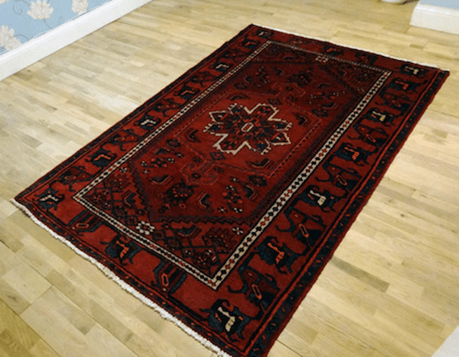
Hand-knotted rugs — Persian, oriental, Turkish, Afghan, and similar — are constructed by individually tying fiber knots around a foundation warp and weft. Both the foundation fibers and the pile fibers can shrink if exposed to excessive moisture, and silk pile specifically requires very low moisture to avoid crushing the fiber and losing its characteristic luster. We clean hand-knotted rugs using low-agitation, controlled moisture techniques.
We offer on-site rug cleaning throughout Fort Worth and the DFW Metroplex — we bring our equipment to you, which means you do not need to roll up, bag, and transport your rug. For large, heavy, or furniture-pinned rugs, on-site cleaning is often the only practical option.
Tufted Rugs — Understanding the Backing Vulnerability
Hand-tufted rugs are made by punching tufts of fiber through a primary backing and securing them with latex adhesive and a secondary backing material. Excessive water can dissolve or soften the latex adhesive, causing the backing to separate and the pile to lose its anchor. We use minimal moisture during tufted rug cleaning and ensure thorough drying to protect backing integrity.
Natural Fiber Rugs — Wool, Jute, and Sisal
Natural fiber rugs each have specific cleaning requirements. Wool is protein-based and requires pH-neutral cleaning solutions — alkaline chemistry causes wool fibers to swell, mat together, and lose structure permanently. Jute and sisal are cellulosic fibers highly sensitive to moisture — wet cleaning can cause browning, shrinking, and distortion. For jute and sisal rugs, we use the driest possible cleaning approach.
Synthetic Area Rugs — More Forgiving, But Still Assessment-Required
Nylon, polyester, polypropylene, and olefin area rugs are significantly more tolerant of moisture and cleaning chemistry than natural fiber rugs. However, even synthetic rugs require assessment — some have latex backings that can be damaged by moisture, some have unstable dyes, and heavily soiled synthetic rugs benefit from pre-treatment chemistry matched to their specific soil type.
* Indicates required field
The Colorfastness Problem — Why We Test Before We Clean
What Dye Bleeding Means and Why It Happens
Dye bleeding — where colors from one area of a rug migrate into an adjacent area during cleaning — is one of the most damaging things that can happen during rug cleaning, and it is permanent. It occurs when unstable dyes come into contact with water or cleaning chemistry and dissolve from the fiber. Some rug dyes are highly stable; others — particularly in less expensive imported rugs or very old vintage pieces — are not.
Our Colorfastness Testing Protocol
Before cleaning any rug, we conduct a colorfastness test in an inconspicuous area — typically the corner or edge — using the cleaning solution we intend to use. We apply a small amount, wait briefly, and blot with a white cloth. If any color transfers to the cloth, we adjust our approach. If bleed risk is significant and we cannot safely clean the rug without probable color damage, we tell you before we begin.
Pet Urine in Rugs — Why It Is the Most Challenging Rug Problem
The Penetration Problem
When a pet urinates on a rug, the urine penetrates through the face fibers, through the foundation, and into the backing — and if the rug is lying on a hard floor, it can pool in the backing and wick sideways through the foundation fibers, spreading contamination well beyond the visible surface stain.
Why Odor Returns After Surface Cleaning
The characteristic persistent odor of pet urine is caused by uric acid crystals that form as urine dries. These crystals are stable when dry but re-activate when exposed to humidity — which is why the odor returns every time the air is humid. Masking the odor with fragrance does not address the crystals; they continue to re-activate.
Our Enzyme Treatment Protocol for Urine-Affected Rugs
We apply professional enzyme solution to affected areas after initial cleaning, ensuring it penetrates to the depth of the urine contamination. For significant urine events, we may treat from both the face and the back of the rug. We allow 15 to 20 minutes of dwell time before extraction. For rugs with multiple urine events or deep saturation, we provide an honest assessment of expected odor removal outcome before beginning.
Area Rug Types We Clean in Fort Worth
- Persian and oriental rugs — hand-knotted and machine-made
- Wool area rugs — all pile weights and constructions
- Silk and silk-blend rugs
- Synthetic area rugs — nylon, polyester, polypropylene, and olefin
- Jute, sisal, and natural fiber rugs (dry cleaning method)
- Hand-tufted designer area rugs
- Shag and high-pile area rugs
- Vintage and antique rugs
- Custom and designer rugs
Why Choose Greater Fort Worth Carpet Cleaning for Rug Care
- On-site service — we come to you, no transport required
- Construction-specific cleaning — we understand what we are cleaning before we begin
- Colorfastness testing before any cleaning solution is applied
- Enzyme treatment for pet urine — molecular-level odor elimination
- Honest assessments — we tell you what we can and cannot accomplish
- IICRC certified technicians
- 100% satisfaction guarantee